





The interactive exhibition ”The Evolution of the Princely Court of Iași” was organized by the Iași.Travel Association in partnership with the National Museum Complex “Moldova” Iași, in collaboration with Atelier Spre and co-financed by the City Hall of Iași through the annual financing program for non-governmental organizations and had its opening on Sunday, October 9, 2022 at the Museum of History of Moldova within the Palace of Culture – Iași.
Our Multidisciplinary Approach
What makes our project unique is the diversity of expertise within our implementation team. We brought together geographers, architects, historians, designers, and 3D design specialists, each contributing their perspective to recreate historical accuracy while pushing the boundaries of digital innovation. This multidisciplinary collaboration allowed us to approach the project from multiple angles—understanding the geographical context, ensuring architectural authenticity, creating compelling visual narratives, and mastering the technical challenges of digital reconstruction.
The Research Phase: Collaborating with Historians
We knew from the start that technological innovation meant nothing without historical accuracy. That’s why we worked closely with historians and consulted extensive archival materials—historical plans, narratives, and documents—to ensure every detail was authentic. Our research focused on five pivotal stages in the Court’s evolution:
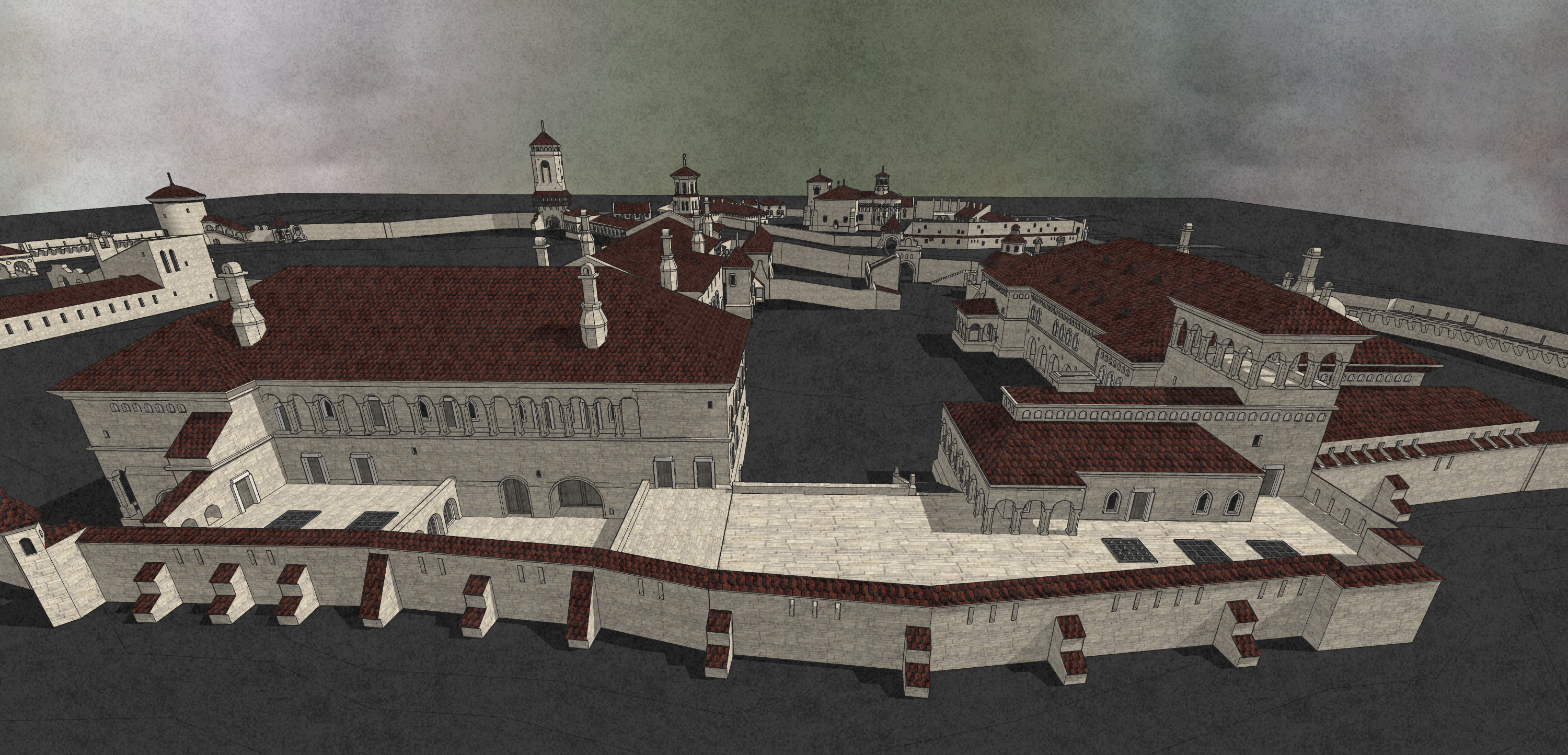
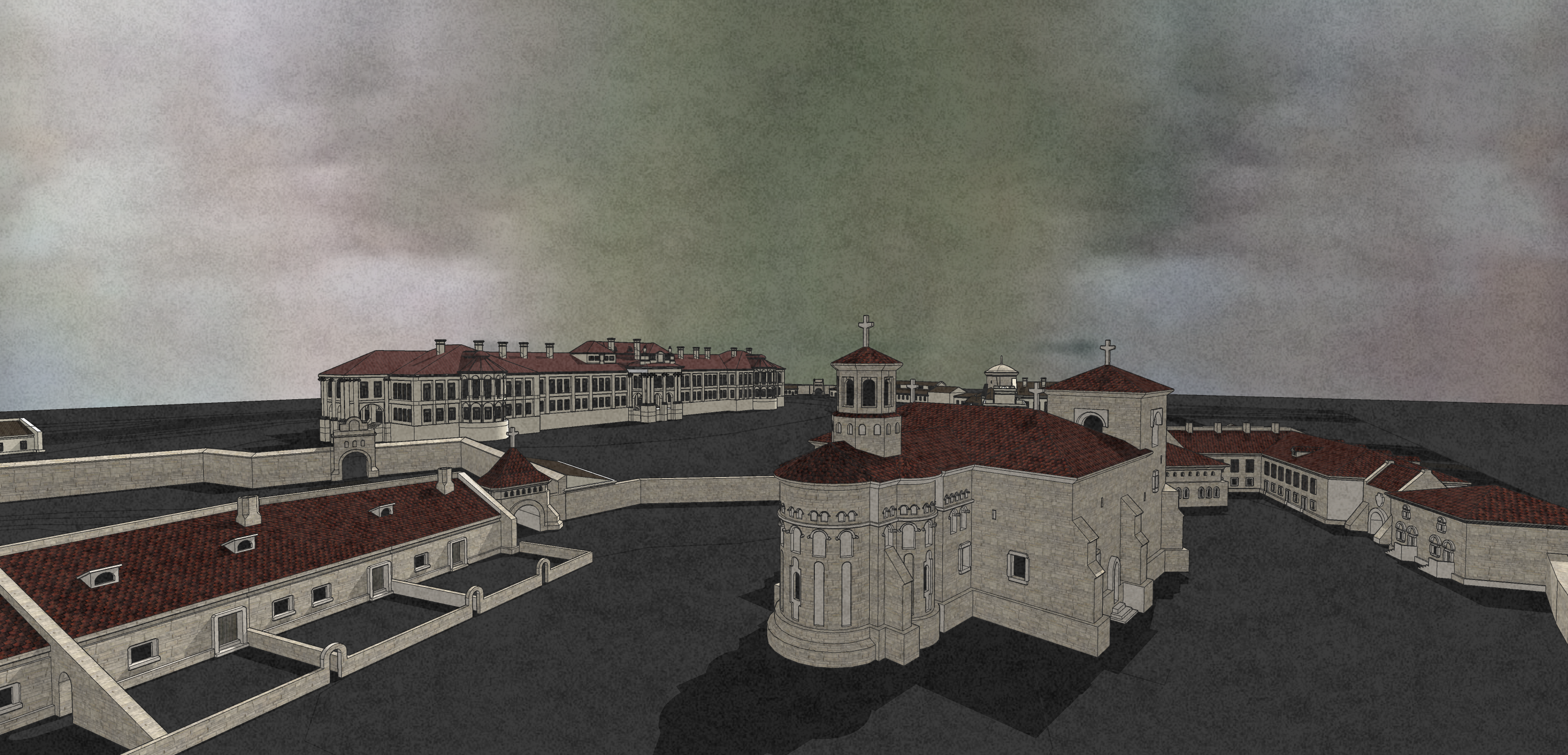
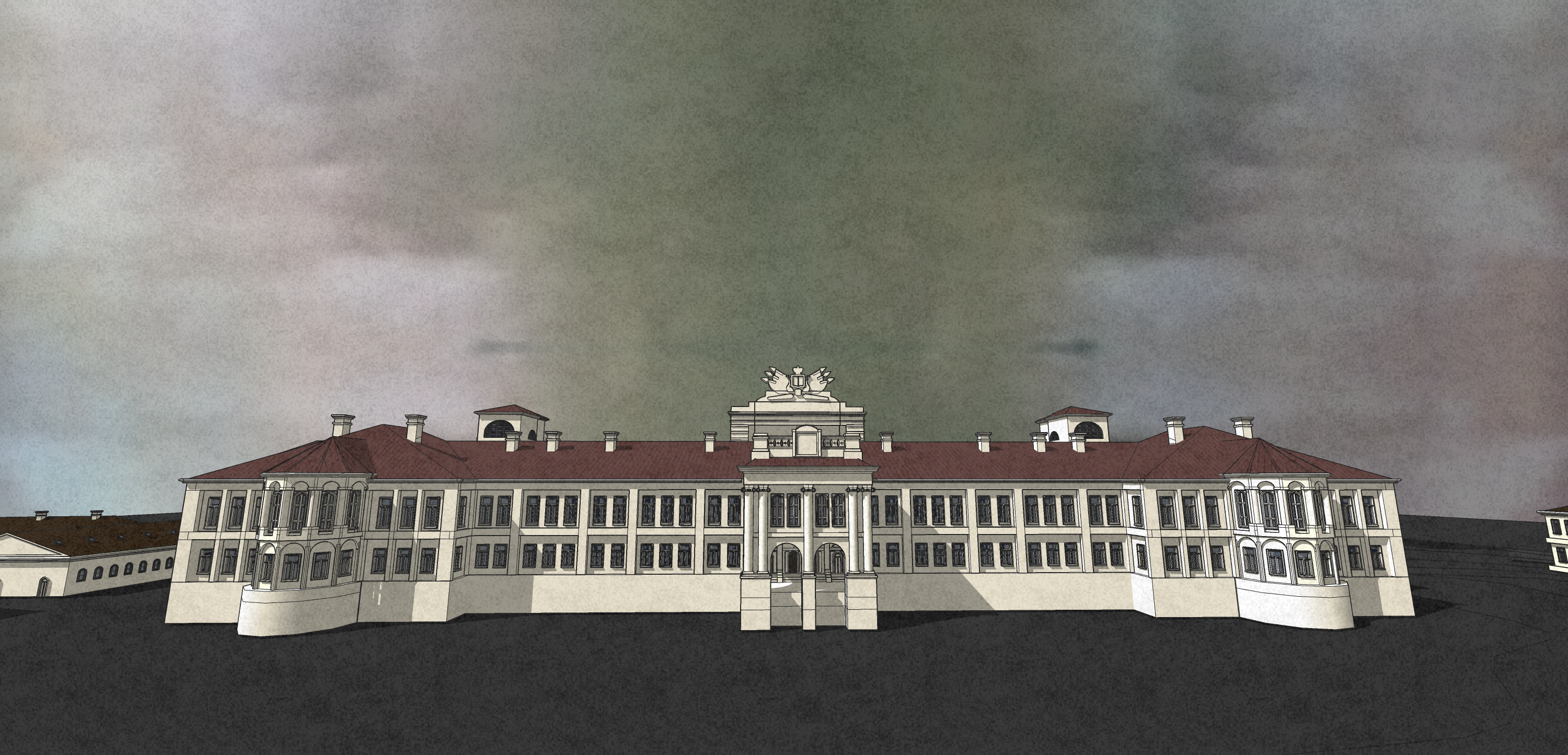
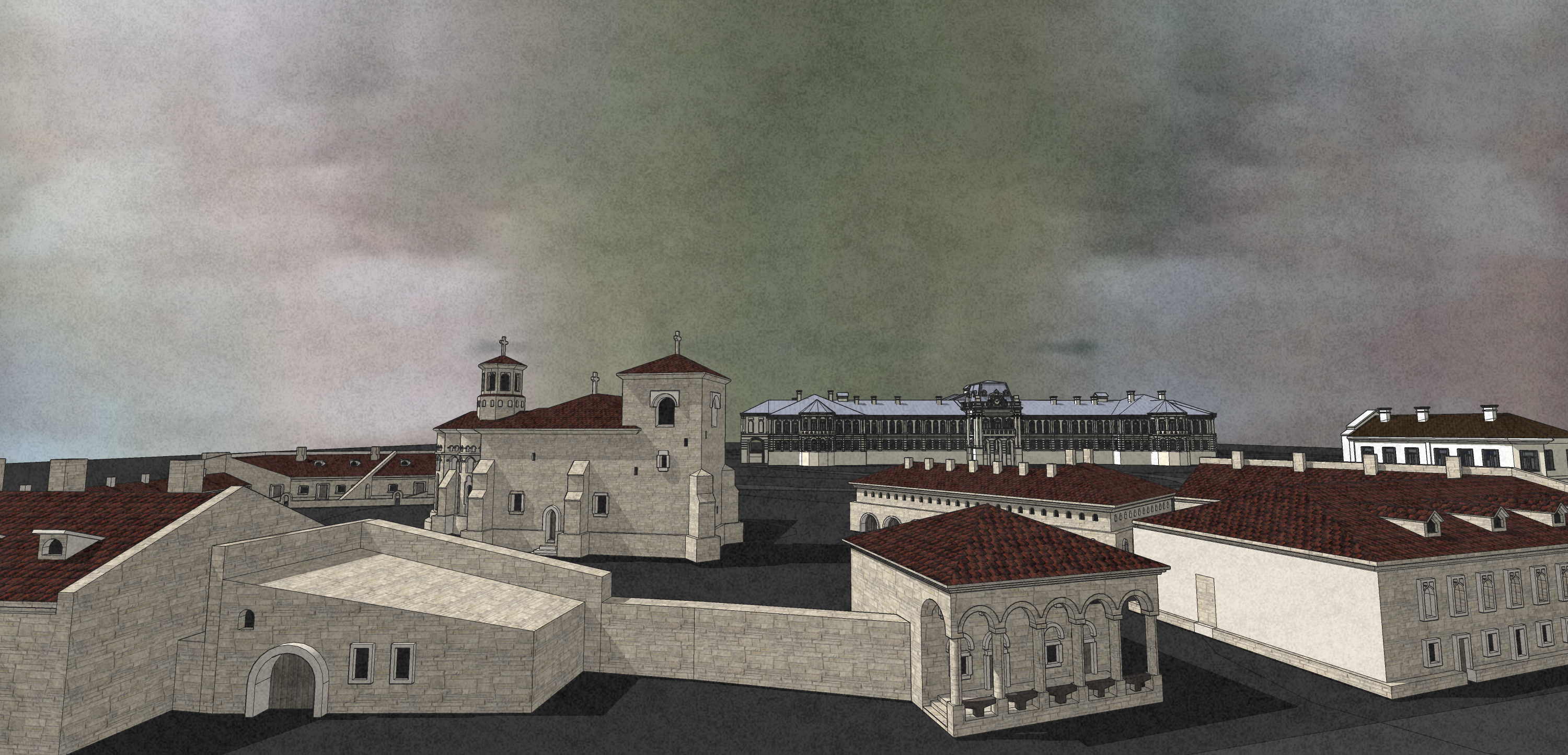
We began with Vasile Lupu’s substantial expansion in the mid-17th century, when the ruler revolutionized court architecture by building two separate palaces connected by a spectacular terrace overlooking a great pond. We then moved to Alexandru Moruzzi’s Western-inspired neoclassical palace of the early 19th century, featuring over 70 rooms and the largest throne room in Extra-Carpathian Romanian territories. The third stage captured Mihail Sturza’s transformation of the site into institutional headquarters in the 1840s. The fourth stage documented the post-1880 reconstruction that created the modern public space, culminating in the unveiling of Ștefan cel Mare’s statue. Finally, we recreated the neo-Gothic Palace of Justice designed by I.D. Berindei and inaugurated in 1925, which today houses the National Museum Complex Moldova.
Using the historical plans recently discovered by Prof. Laurențiu Rădvan and dr. Mihai Anatolii Ciobanu in the Moscow Archives, lithographs, archaeological research, text descriptions and photographs of the buildings in this area, the project brings to light, for the first time, in an interactive manner, the constructions within the perimeter of the Princely Court of Iași.

Bringing History into Three Dimensions
Our first challenge was translating historical research into precise 3D models. Working with our team of 3D specialists and architects, we carefully reconstructed each architectural stage, paying attention to building proportions, structural details, and spatial relationships. These digital models were then physically 3D printed, creating tangible representations that visitors could examine and understand at a glance. The physical models serve as both educational tools and artistic objects, making the Court’s complex evolution immediately comprehensible.
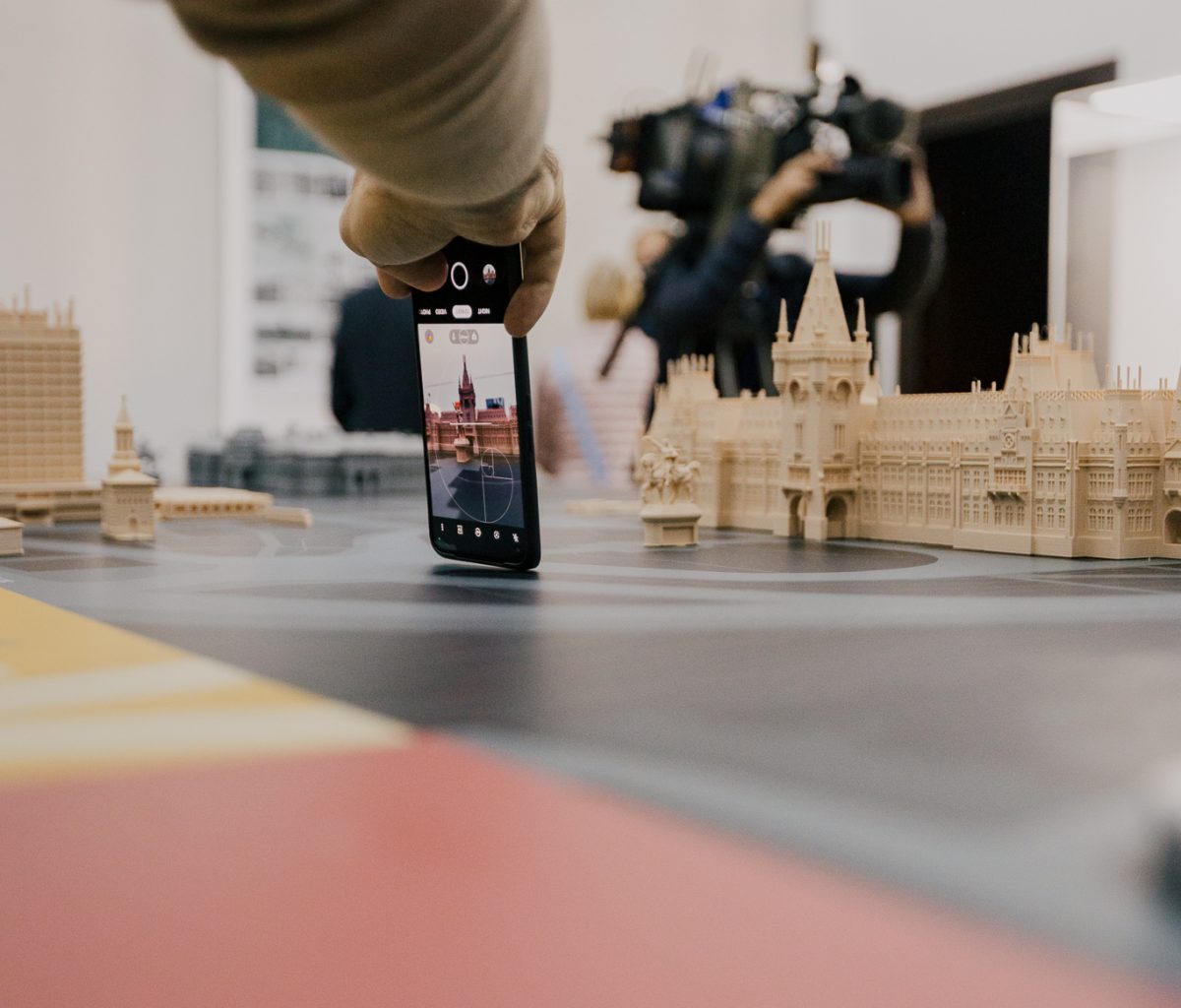

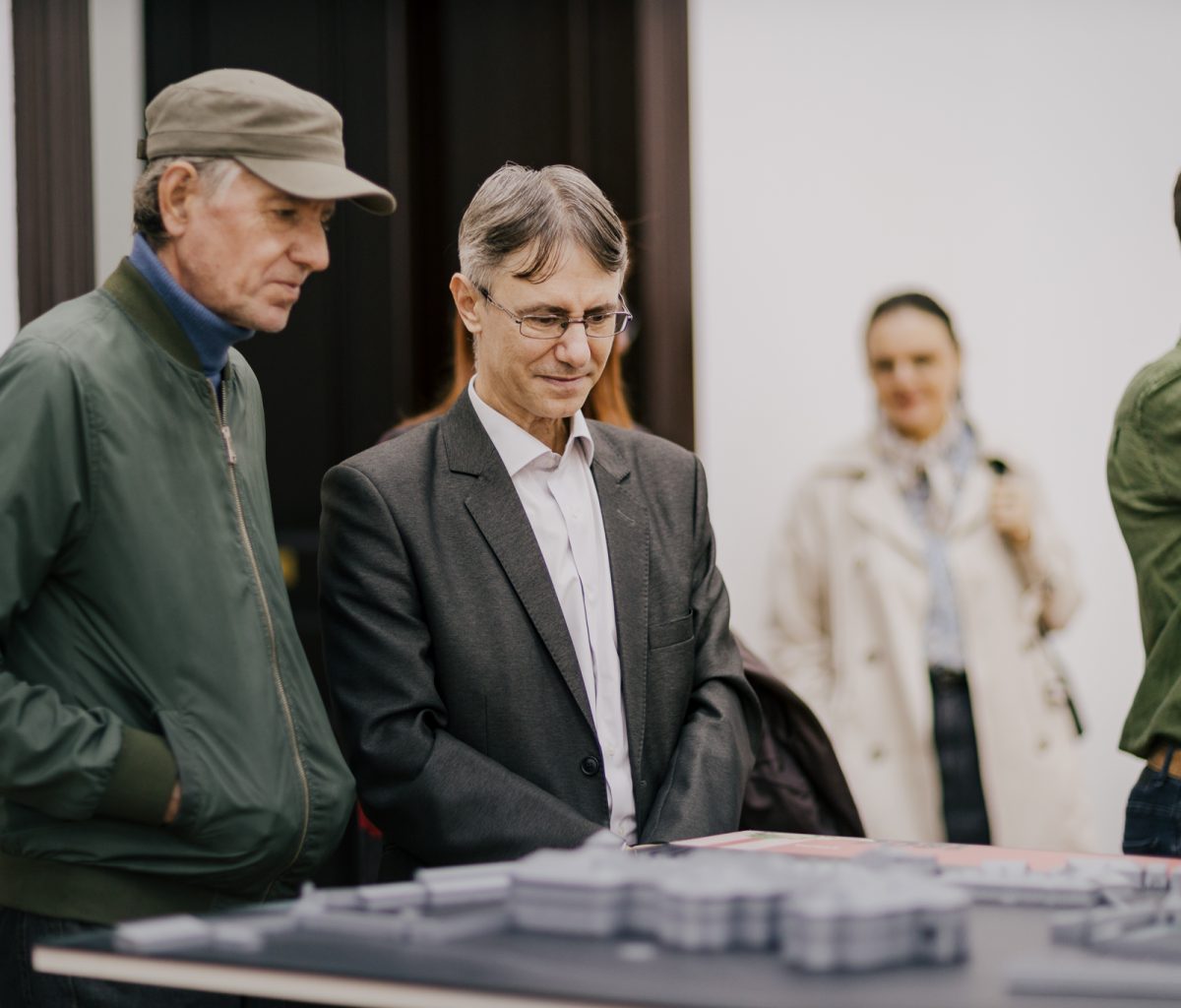
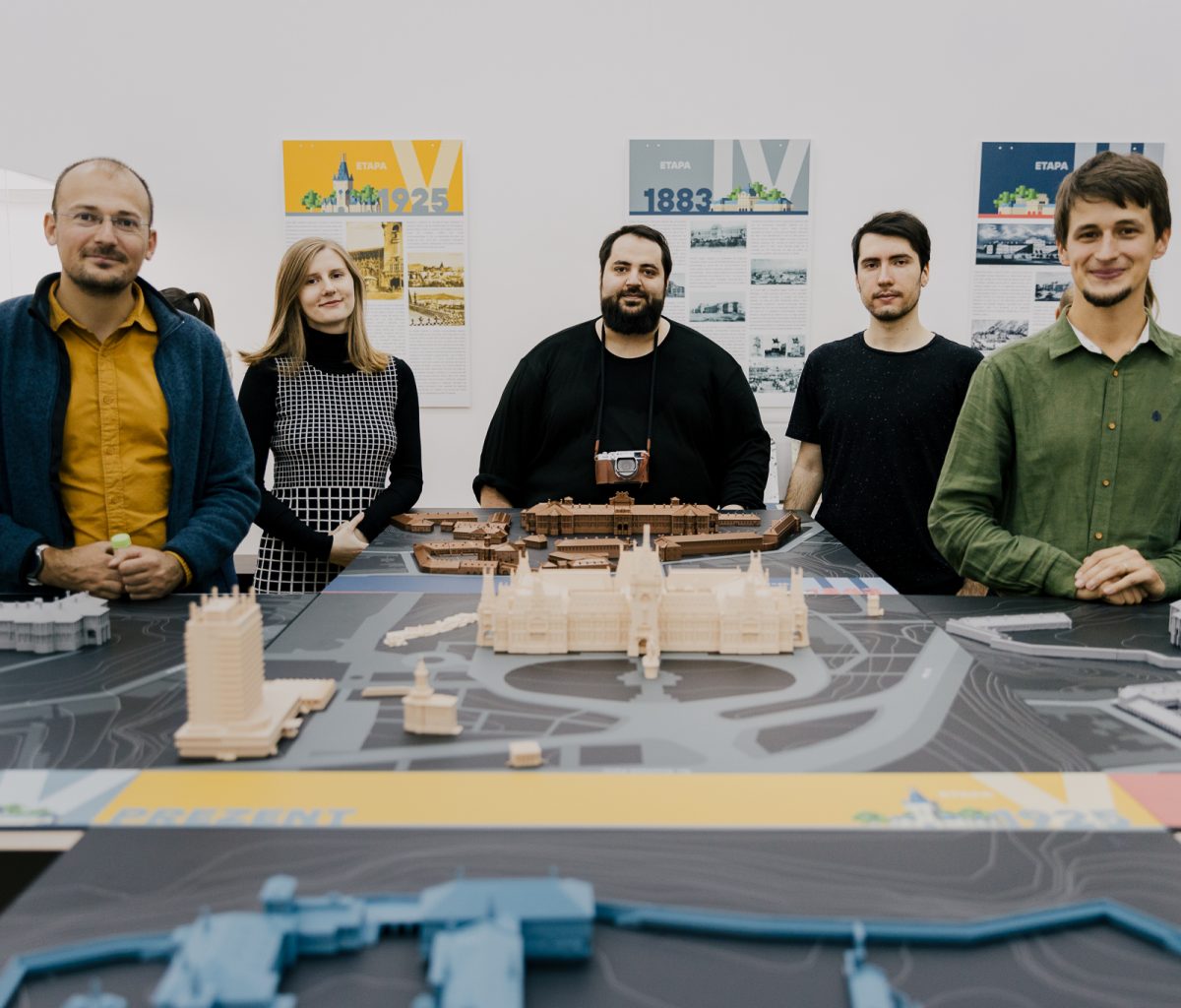

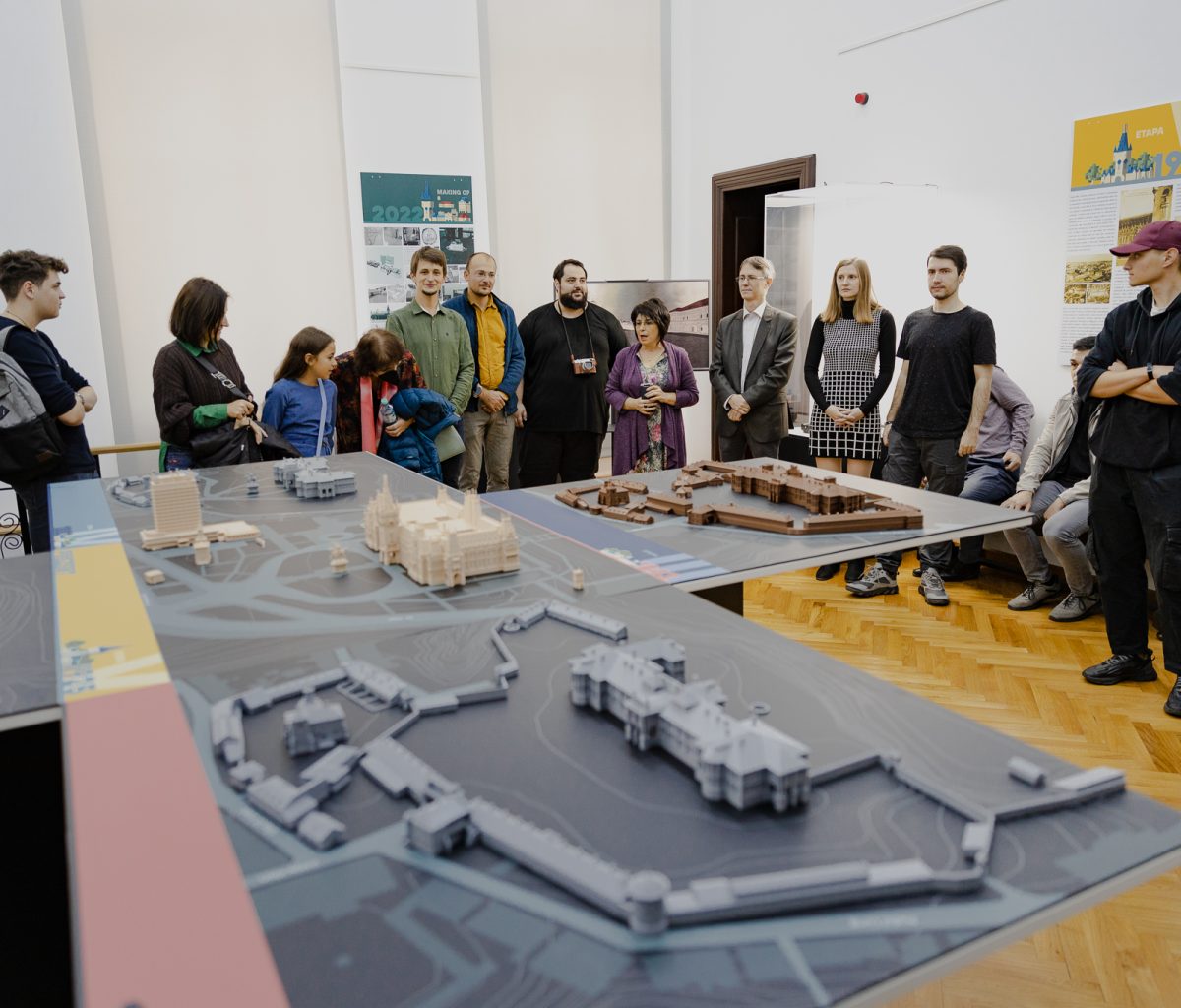
With the help of digital techniques, 3D modeling and printing, the project reconstructs, with a high degree of detail and fidelity, the different stages of evolution of the Princely Court of Iași, starting from the 18th century until today, showing, for the first time, the three-dimensional form of the Princely Court of Iași.
The project aims to consolidate knowledge of the evolution of the Princely Court of Iași with the help of digital and 3D technologies. In this way, young people will become more interested in cultural heritage and can become promoters of the role that the buildings in this area have had in the history of Iași and Moldova.
The multidisciplinary working team was formed by lect. dr. Lucian Roșu and Cosmin Ceucă – geographers, prof. univ. dr. Laurențiu Rădvan – historian, architect dr. Tiberiu Teodor-Stanciu, as well as specialists in three-dimensional modeling – Lucia Eșanu and Tudor Boicu and brings to the fore-front five stages of evolution of the Princely Court of Iași, digitally modeled and exhibited as 3D printed models.
The exhibition can be visited at the Museum of History of Moldova within the premises of the Moldova National Museum Complex – Iași Palace of Culture.